

Welcome to this first blog post of Still Waters.
It means a lot to me that you—reading this—are alongside me as I embark on this new journey of penning down my thoughts and experiences. It’s a new venture for me, and I hope some of you find it useful in your own writing endeavors and practices or simply enjoy following the blog for pleasure. Please know that I appreciate all of you reading this and those supporting the work that I have done and will continue to do.
As a poet, I have always attempted to navigate the questions of what inspires poetry, what fragments it takes to piece together a poem, and what nuances and subtleties are needed. Is poetry determined by a spur-of-the-moment magic or a collage thrust onto a mirror, peeling layers to engage one to reflect the verse onto themselves as any good piece of art endeavors to do? I don’t believe anyone would attempt to say they have answers, but for me, I love exploring those quiet moments between the question and any potential epiphany as a moment of subtle magic and poetry.
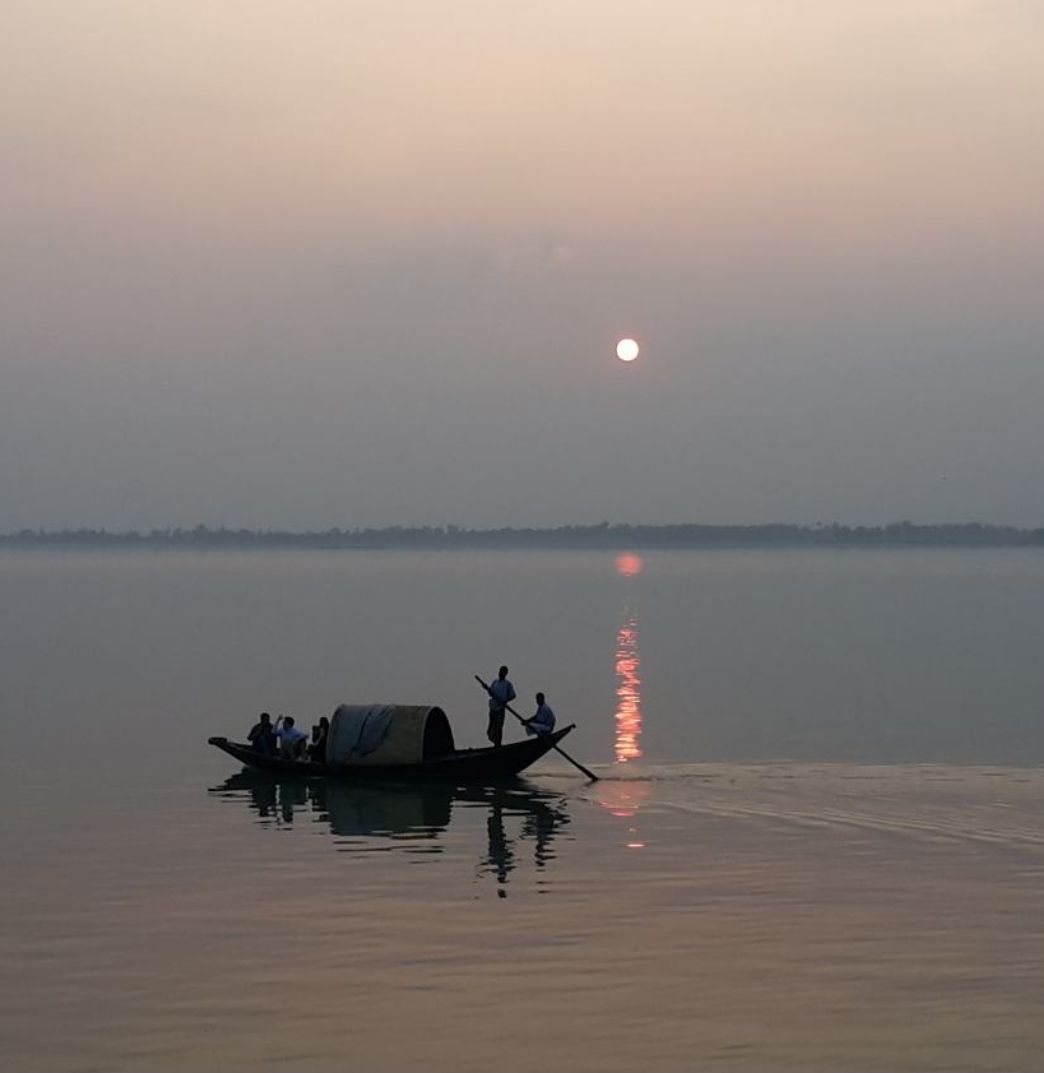
This blog post was inspired by the series “What Sparks Poetry!” and I welcome you to explore a poem I wrote years ago. It took a long time to pen, but I was able to, in a moment—of Still Waters.
Shehzar
Anatomy of a/-drift
I grew up in Dhaka, but my childhood was often marked by visits to the northern regions of Bangladesh, accompanying my mother who ran an NGO. It was on one such visit that I witnessed a sight that would stay with me for years—a body washed ashore, a disturbing testament to the ravages of climate change. It was also visceral as it had taken place after the breaking of a char in a quiet unspoken distance. This harrowing archived memory resurfaced years later when another image struck the world’s conscience: the lifeless body of Aylan Kurdi, stranded on a European beach. This ruminating parallel of tragedies, shifted across continents and time, came to inspire my poem “Drift.” The poem was born from a deep-seated need to express the sorrow, helplessness, and transient nature of life in the face of overwhelming forces.
Commissioned for a festival in Amsterdam, two poets from each European country were selected and then invited to explore themes of Europe and peace, or democracy (among others). Alongside the esteemed Jean Portante, I had the honour of representing Luxembourg, and I chose to delve into the first theme, guided by the haunting essence of Aylan Kurdi and my own childhood experience. I felt the poem had to be short but powerful and evocative.
Drift
Are we merely empty lines?
hollow sketches, forgettable fodder, dejected outlines?
Forgive us as trespassers
as we transgress our own wake
— wave after wave, our corpses
folded into eulogies.
What broken voices lull us to sleep?
What forgiveness?
As we embrace separate shores
— one more silenced voice drifts up —
between sand
and the ocean.
This single photograph of the child encapsulated the horrific reality of the Syrian refugee crisis (with constant re-emerging of parallels always resurfacing), prompting a global outpouring of grief and a renewed call for compassion. For me, however, it resurrected the memory of that body in Bangladesh, a casualty of environmental calamity. The connection between these two tragedies, seemingly worlds apart, lay in the shared experience of displacement and loss. With the poem, I sought to explore this connection, weaving together themes of dislocation, memory, and the human condition. The poem opens with a question: “Are we merely empty lines?” to question the nature of our existence, hinting at the transient, often overlooked lives of those who perish in the quest for safety and belonging. With “hollow sketches” and “dejected outlines” I framed the images to evoke the forgotten, and marginalized, whose stories are seldom told and lives made almost skeletal by erasure at times. The line “Forgive us as trespassers” is a plea for understanding and compassion for those who cross borders, often at great personal risk, in search of a better life. I attempted to reflect the tied joint history of Europe and biblical notions of trespassing and forgiveness, a theme that resonates deeply in the context of forced migration and desperation in the (most often ironic) pursuit of peace. The waves, “wave after wave,” for me symbolized the relentless, unforgiving, unrelenting nature of both the sea and the societal forces that drive people from their home towards the distant shores.
Within the poem, I also tried to draw on various literary allusions to enrich its narrative and the collective, historical placement. T.S. Eliot’s poignant inquiry, “After such knowledge, what forgiveness?” from his poem “Gerontion,” throws itself towards into the line “What forgiveness?” This reference tries to underscore the struggle to find forgiveness and redemption in the face of immense suffering and loss. Langston Hughes’ line “-it lulled me to sleep” from his poem “The Negro Speaks of Rivers” is echoed in “What broken voices lull us to sleep?” I love Hughes’ embodied exploration of the African American experience and I wrote the lines hoping the historical consciousness parallels the themes of displacement and resilience in his poem, as a tribute. The late great Alan Rickman’s recitation of Laurie Lee’s ‘The long war for peace’ also always hummed its way as a melancholic reminder of how quickly, so much can be lost from this world. So often it would be on repeat, the echoes particularly ensnared in the last lines; “But as our twisted arms embrace the desert where our cities stood, Death’s family likeness in each face must show at last our brotherhood”. For me, the construction of a poem is not only in the great images it can place on the forefront but also the composite nature of its weave. Inspiration and craft must go together like ink and the paper, the poem finds its way into.
The image of the body washed ashore in Bangladesh serves as a stark reminder of the broader implications of climate change. The breaking of the char, an island formed by the deposition of river sediments, is a direct result of environmental instability. This phenomenon is not unique to Bangladesh but is a global issue, affecting vulnerable communities worldwide. The poem “Ozymandias” by Percy Bysshe Shelley comes to mind, with its reflection on the impermanence of human achievements and the relentless passage of time. Like the shattered statue in Shelley’s poem, the bodies washed ashore remind me of our collective fragile existence and the urgent need for action.
As a poet of colour, the experience of an embodied brown body on European shores also adds another layer of complexity to the narrative. The poem dances around the experience of being a perpetual “other,” drifting between cultures and continents, hoping to find a place of belonging. This sense of drifting (the original title of the poem, cut short to increase its urgency) of never quite fitting in, mirrors the physical drift of bodies across seas and borders. It is a reminder of the ongoing struggle for acceptance and equality.
“Drift” for me, is not just a reflection on past tragedies but a call to action. An urgent poem that I wrote in the sincere hope it urges us to recognize the interconnectedness of our world and the shared humanity that binds and what’s at stake. Climate change, forced migration, and the search for peace are global issues that require collective effort and compassion. As a meditation on memory, loss, and the human condition it bridged personal experiences with broader social and environmental issues, weaving sorrow, resilience, and hope. Through this poem, I hope to honour the memories of those lost and to inspire a collective effort towards a more compassionate and just world.
If you found this post compelling, I invite you to subscribe to Still Waters for more reflections and poetry. Your support means the world to me. Share this blog with friends and fellow poetry enthusiasts—let’s build a community together. I would love to hear your thoughts, so please leave a comment below. Join me on this journey, and let’s explore the depths of poetry and the human experience, together. Thank you for being a part of this.


Leave a Reply